The confectioner's almanac · Volume 06 / The botanical issue
Prismatic lollipop and botanical leaf emblem Prism & Kettle A journal of extraordinary sweetness
Slow craft. Wildly good flavors.

A little sugar.
A whole lot
of wonder.

Step into the colorful world of artisanal candies, botanical lollipops, and flavors that refuse to be ordinary.

Explore the flavor journal ↗
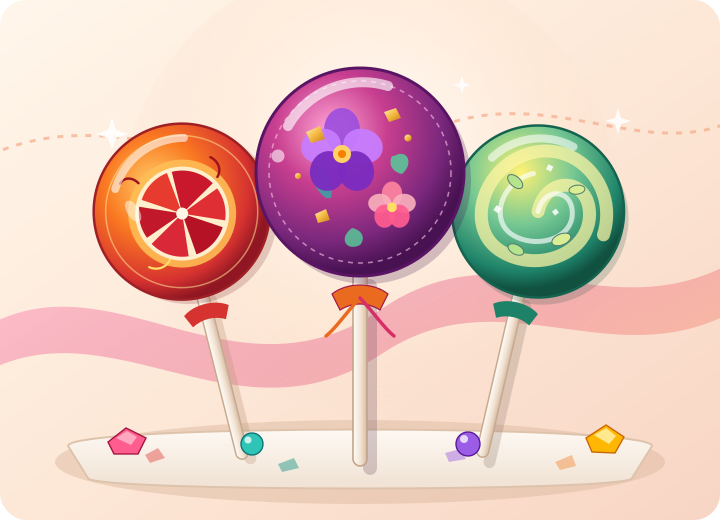
Three luminous handcrafted lollipops with citrus, violet petals, and a green botanical swirl on a sculptural plinth
The botanical collection Color, captured in sugar / 01
Blood orange + saffron ✦ Wild violet + blackcurrant ✦ Yuzu + pink pepper
01 / From the confectioner's notebook

Where craft
meets curiosity.

Follow the pour, the pull, and the unexpected pairing. A closer look at the small decisions behind memorable sweets.

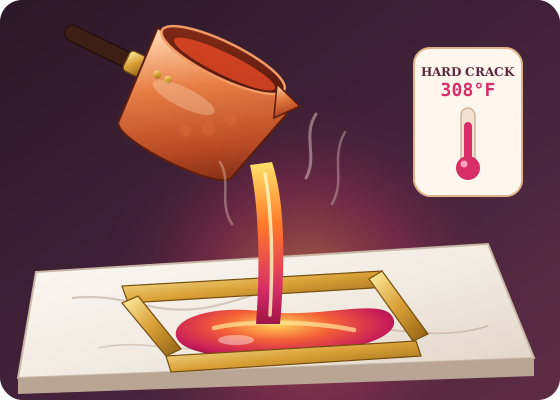
Copper kettle pouring glowing amber sugar onto a marble slab
Technique / The transformation

From a copper kettle to a little pane of light.

Hard candy begins with a deceptively simple transformation: as water leaves the syrup, the sugar becomes concentrated enough to set into a glassy solid. Time, temperature, and a clean work surface make all the difference.

Clear candy rewards restraint. Stir only as your tested recipe directs, keep stray crystals away from the pan walls, and have molds prepared before the syrup is ready. A thermometer is a guide, never a substitute for attentive work.

Visit the kettle notebook →
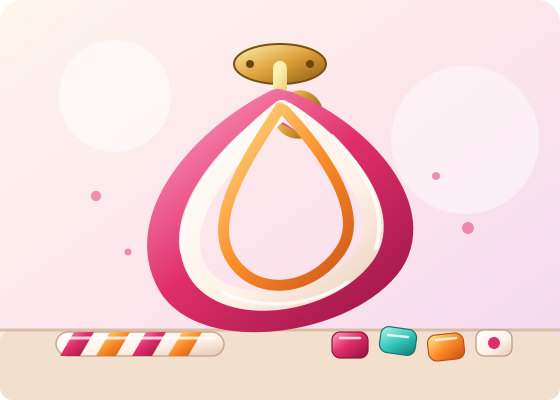
Glossy pink and cream pulled sugar ribbons on a brass hook
Texture / Satin ribbons

The beauty is in the pull.

Pulling workable sugar folds in tiny air pockets, changing a transparent mass into a pearly ribbon. That satin sheen is texture made visible—not a different ingredient.

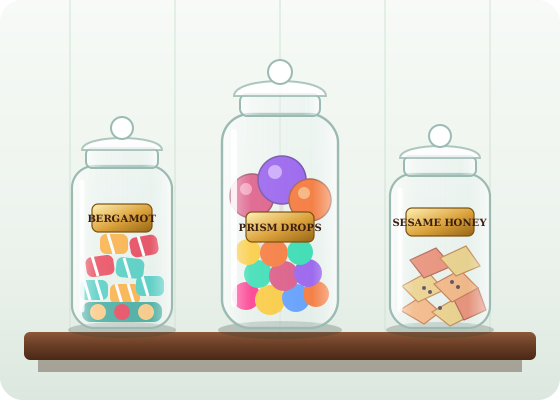
Glass apothecary jars filled with colorful artisan candies
Field notes / The candy shelf

A cabinet of little marvels.

Bergamot pillows, sesame drops, and jewel-like pops: store finished hard candy airtight, cool, and dry. Humidity can turn a crisp surface sticky.

02 / A playful palate study

Find your
flavor chord.

A great pairing has a beginning, a middle, and a finish. Explore three imaginary tasting compositions with our Aroma & Palate Tasting Compass.

Scores are editorial impressions, not laboratory measurements. They describe the suggested flavor combinations, not nutritional properties.

Aroma & Palate Tasting Compass

Yuzu · honey · pink pepper

A bright citrus opening, a rounded honey middle, and a gently peppery finish. Taste the plain citrus note first, then compare the aromatic lift of pepper.

Brightness 5/5
Floral 1/5
Warmth 3/5
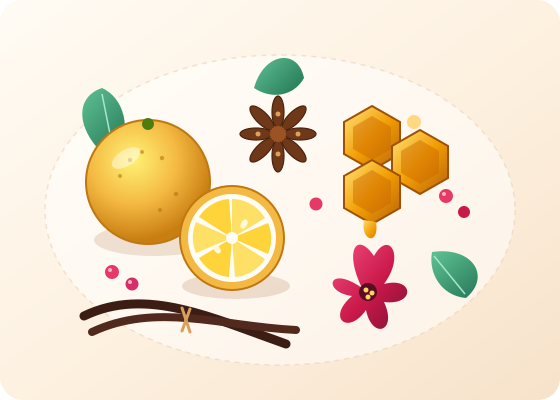
Yuzu citrus, hibiscus petals, star anise, vanilla, and honeycomb on a cream platter
03 / The flavor pantry

Think beyond
sweet.

Try thinking in contrasts: tart fruit against toasted seeds, a whisper of spice against honey, or a floral top note above a deep berry base. The most compelling flavors often come in pairs rather than a long ingredient list.

Make a tasting note before you make a batch. Smell your ingredients separately, then together. Culinary-grade extracts behave differently from fresh juice or dried flowers; use ingredients intended for food and follow a tested recipe for when and how much to add.

“Let one flavor lead.
Give the others something to say.”

Use only verified edible botanicals from food suppliers. Decorative flowers and essential oils are not interchangeable with culinary ingredients.

04 / The kettle notebook

A moment
makes a texture.

Syrup stages are shorthand for concentration. Explore the difference between a thread, a soft ball, and a brittle glass, then scale a reference ingredient ratio.

This is a planning tool, not a complete cooking recipe. Changing the batch size changes heating behavior; it does not change the target stage. Use a tested recipe and suitably sized equipment.

Read the kitchen safety notes ↗
Glass & Kettle Stage Guide

Hard-crack stage

300–310°F · 149–154°C

Threads become brittle in cool water. This is the usual reference range for clear hard candy, subject to recipe, thermometer calibration, and altitude.

Batch yield scaler / reference weights

Sugar 200 g / 7.05 oz
Glucose syrup 100 g / 3.53 oz
Water 60 g / 2.12 oz

Planning scale: 1× the reference batch. Final yield varies with moisture loss and shaping.

Weights use US avoirdupois ounces, not fluid ounces. Never touch or taste hot syrup; molten sugar causes severe burns.

05 / Small rituals, extraordinary sweets

Make room for a little delight.

A few ways to look more closely, taste more thoughtfully, and share the pleasure of handmade candy.

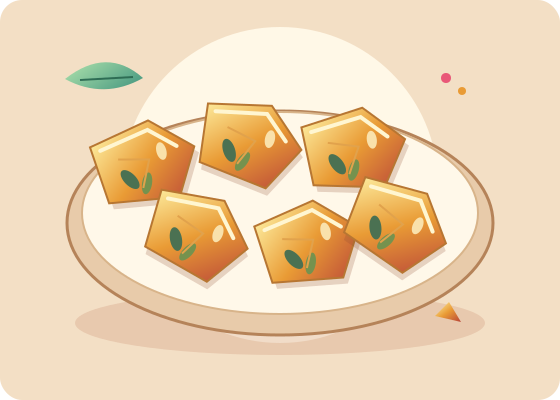
Golden translucent brittle shards studded with green pistachios on a ceramic plate
Amber shards & toasted pistachio

A brittle becomes a tiny stained-glass window when light catches the edges. Roasted nuts bring texture and contrast; label nuts clearly when sharing, and wrap pieces individually once completely cool.

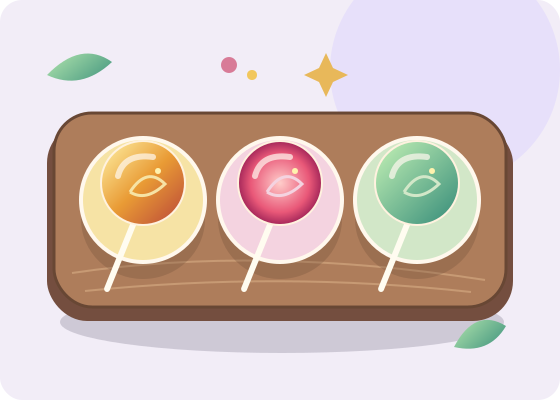
Three jewel-colored lollipops on small dishes arranged on a walnut tasting tray
A three-note tasting flight

Arrange citrus, floral, and toasted flavors from lightest to deepest. Pause between tastes, sip water, and write down the first aroma and the final impression. There is no correct favorite—only a more curious palate.